Topic
Accessibility Blog
-
Accessibility Blog
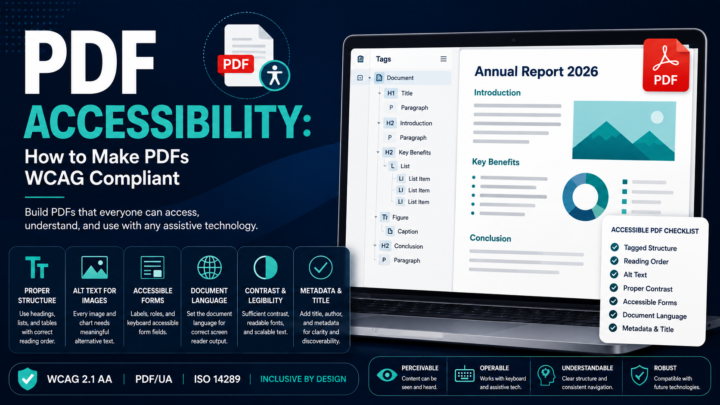
PDF Accessibility: How to Make PDFs WCAG Compliant
A PDF can look perfect on screen clean layout, brand fonts, proper columns and be completely invisible to a screen reader. That’s…
-
Accessibility Blog
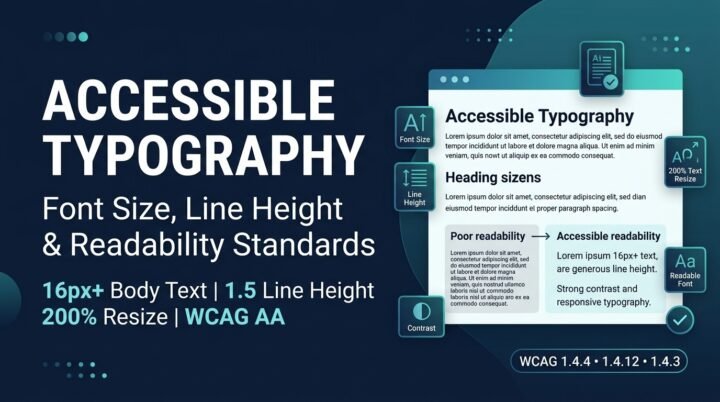
Accessible Typography: Font Size, Line Height & Readability Standards
Your designer picks a 13px light-gray font because it looks clean. Your developer ships it. Your users with low vision, dyslexia, or…
-
Accessibility Blog
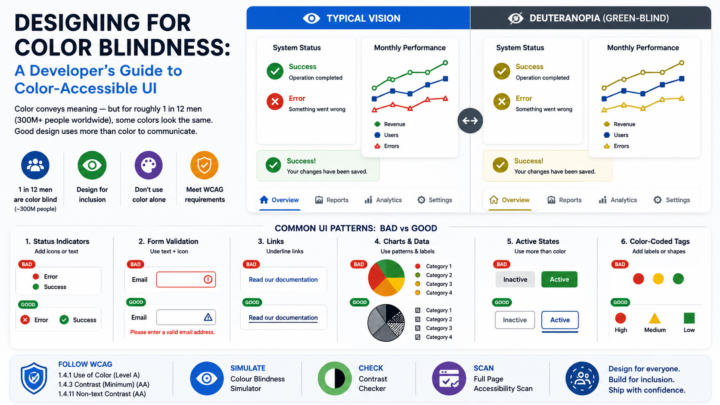
Designing for Color Blindness: A Developer’s Guide to Color-Accessible UI
You pick a clean red-and-green status system — red for errors, green for success — ship it, and assume the job is…
-
Accessibility Blog
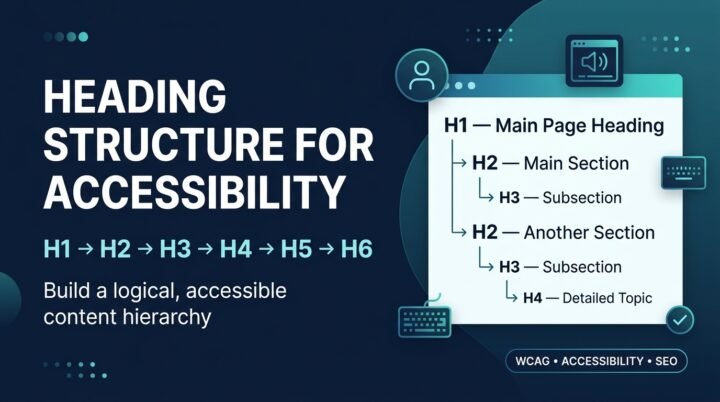
Heading Structure for Accessibility: H1–H6 Best Practices
Headings are more than large, bold text on a webpage. A well-planned heading structure gives your content a logical organization that helps…
-
Accessibility Blog
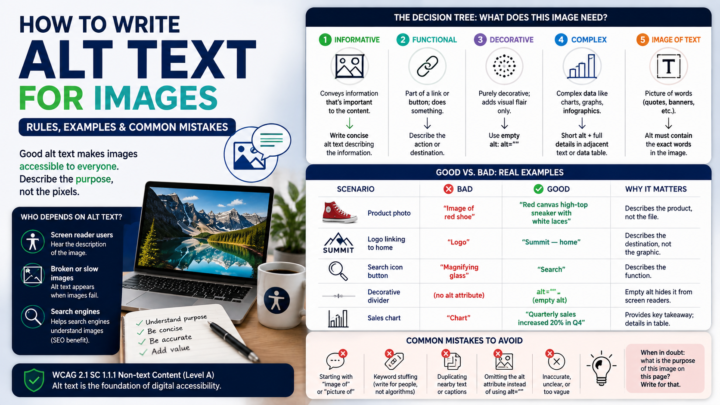
How to Write Alt Text for Images: Rules, Examples & Common Mistakes
Turn on a screen reader and tab through the average website and you’ll hear it: “Image. Image. IMG_4523 dot jpg. Image. Link,…
-
Accessibility Blog
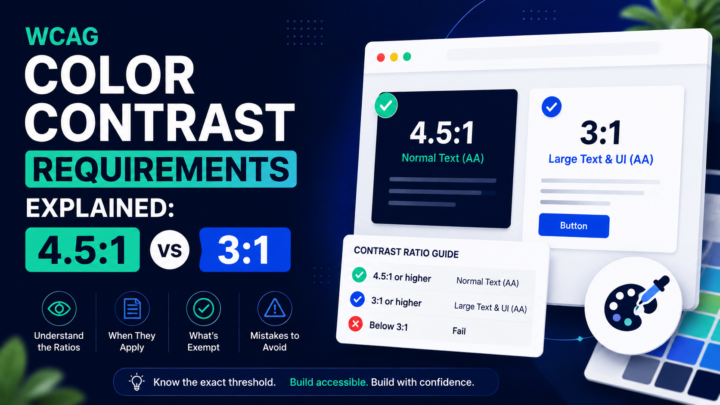
WCAG Color Contrast Requirements: 4.5:1 vs 3:1 Explained (2026)
Your brand’s light gray text looks clean in Figma. It ships. Three weeks later an automated scan flags dozens of “contrast” failures…
-
Accessibility Blog
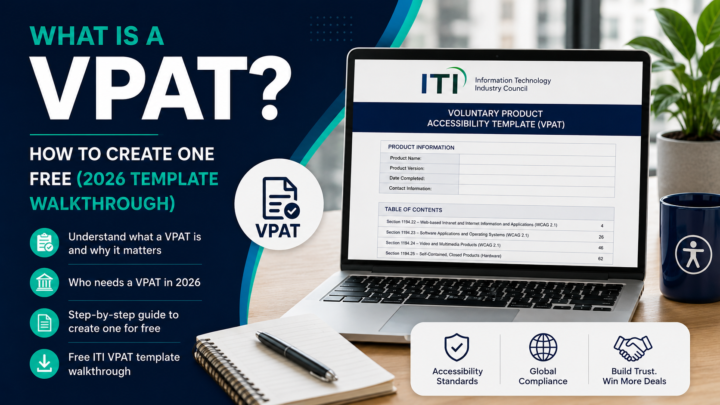
What Is a VPAT? How to Create One Free (2026 Template Walkthrough)
A buyer asks for your VPAT on a Friday, and suddenly nobody on your team owns the document. It turns out it…
-
Accessibility Blog
Creating an Internal Website Accessibility Policy: A Step-by-Step Guide
An internal website accessibility policy helps organizations maintain consistent accessibility standards, assign responsibilities, and support WCAG and ADA compliance. Clear guidelines ensure…
-
Accessibility Blog
How to Track Website Accessibility Progress Over Time
Tracking accessibility over time helps website owners measure improvements, catch new issues early, and maintain WCAG and ADA compliance. Using accessibility checkers,…
-
Accessibility Blog
Who Is Responsible for Website Accessibility? Roles, Duties, and Best Practices
Website accessibility is a shared responsibility. Website owners, designers, developers, content creators, and managers all play a role in maintaining accessibility and…



Find out what's broken.
Then actually fix it.
One URL. Nine seconds. No account, no card, no call.