Guides, teardowns and legislation tracking
Blog
Practical accessibility writing for people who have to ship the fix — not just read about it.
-
Accessibility Blog
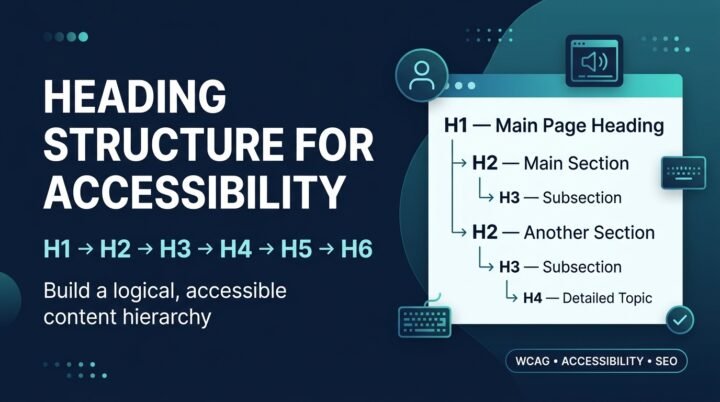
Heading Structure for Accessibility: H1–H6 Best Practices
Headings are more than large, bold text on a webpage. A well-planned heading structure gives your content a logical organization that helps…
-
Website Security
Why WordPress Sites Keep Getting Hacked in 2026 (And How to Actually Fix It)
If you run a WordPress site and haven’t dealt with a hack yet, you’re either doing everything right or you’ve just been…
-
Accessibility Blog
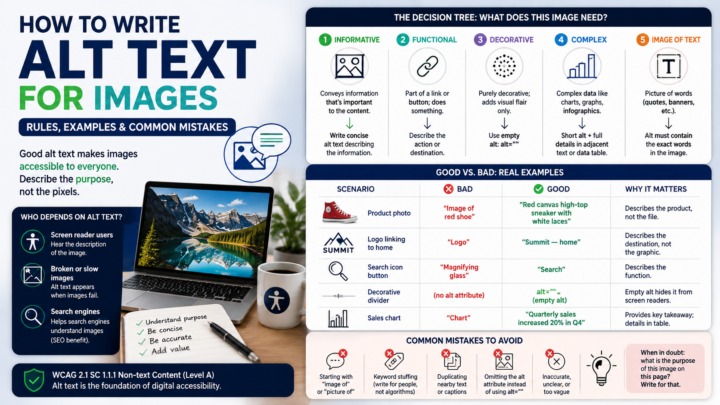
How to Write Alt Text for Images: Rules, Examples & Common Mistakes
Turn on a screen reader and tab through the average website and you’ll hear it: “Image. Image. IMG_4523 dot jpg. Image. Link,…
-
Accessibility Blog
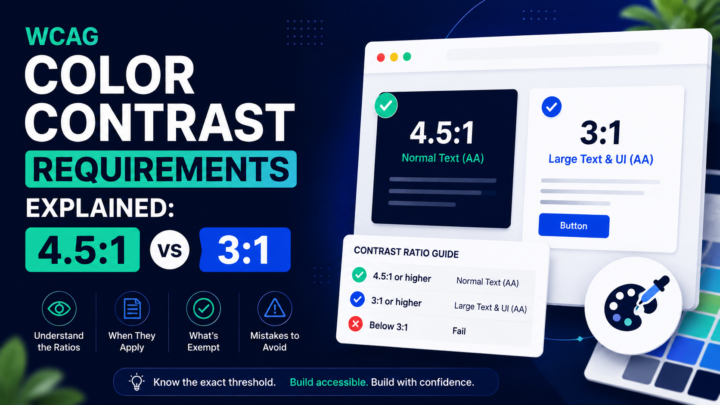
WCAG Color Contrast Requirements: 4.5:1 vs 3:1 Explained (2026)
Your brand’s light gray text looks clean in Figma. It ships. Three weeks later an automated scan flags dozens of “contrast” failures…
-
Accessibility Blog
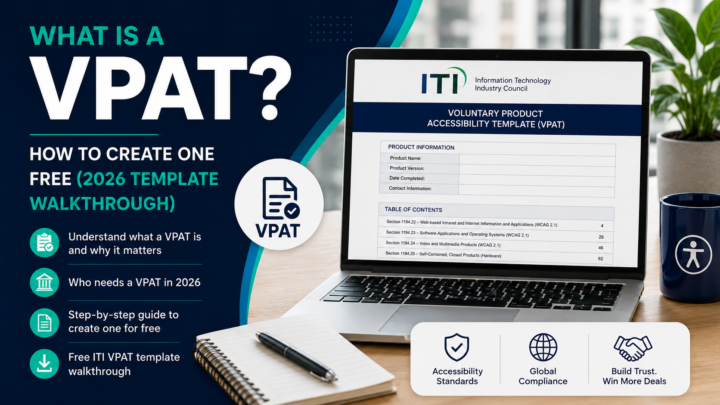
What Is a VPAT? How to Create One Free (2026 Template Walkthrough)
A buyer asks for your VPAT on a Friday, and suddenly nobody on your team owns the document. It turns out it…
-
Accessibility Blog
Creating an Internal Website Accessibility Policy: A Step-by-Step Guide
An internal website accessibility policy helps organizations maintain consistent accessibility standards, assign responsibilities, and support WCAG and ADA compliance. Clear guidelines ensure…
-
Accessibility Blog
How to Track Website Accessibility Progress Over Time
Tracking accessibility over time helps website owners measure improvements, catch new issues early, and maintain WCAG and ADA compliance. Using accessibility checkers,…
-
Accessibility Blog
Who Is Responsible for Website Accessibility? Roles, Duties, and Best Practices
Website accessibility is a shared responsibility. Website owners, designers, developers, content creators, and managers all play a role in maintaining accessibility and…
-
Accessibility Blog
How Website Accessibility Improves Performance, UX, and SEO
Accessible websites load faster, perform better, and provide a smoother user experience. By following accessibility best practices, website owners improve usability, engagement,…
-
Accessibility Blog
Accessibility for Non-Technical Website Owners: A Practical Guide
Website accessibility isn’t just for developers. Non-technical website owners can improve accessibility by understanding common issues, using accessibility checkers, creating accessible content,…






Find out what's broken.
Then actually fix it.
One URL. Nine seconds. No account, no card, no call.